

Understanding Independent Play and Setting Toddlers Up for Success
Understanding Independent Play and Setting Toddlers Up for Success
Independent play isn't about keeping your toddler occupied for hours. It's about giving them the confidence, space, and materials to discover what they can do on their own.
There is a familiar moment in many homes.
You've just started making dinner.
Your toddler has a room full of toys.
And within minutes, you hear:
"Come play with me!"
You look around at the blocks, books, puzzles, and stuffed animals scattered across the room and wonder:
How can there be so many toys and still be nothing to do?
The answer is often not that your toddler needs more toys.
They may simply need a different kind of play experience.
Independent play develops when children have opportunities to make choices, explore familiar materials, solve manageable problems, and follow their own ideas without an adult directing every step.
And it doesn't happen overnight.
For some toddlers, independent play may begin with just a few minutes. For others, it may take longer to develop.
The goal isn't to make your child play alone.
The goal is to help them become increasingly comfortable playing by themselves while knowing that you are nearby when they need you.
What Does Independent Play Actually Mean?
Independent play is often misunderstood.
It doesn't necessarily mean leaving your toddler alone in another room.
It doesn't mean ignoring them.
And it certainly doesn't mean expecting a very young child to entertain themselves indefinitely.
Independent play simply means that the child is directing the activity.
You might be sitting nearby reading a book while your toddler builds.
You might be preparing lunch while they look through books.
You might be folding laundry while they play with a familiar set of toys.
You are present.
But you're not responsible for deciding what happens next.
That distinction matters.
The child is gradually learning:
"I can choose something."
"I can figure this out."
"I can keep going."
"I can create my own game."
Those are valuable experiences.
Why Some Activities Encourage Independent Play Better Than Others
Have you ever bought a toy that promised to keep your child entertained, only to hear:
"Mummy, Daddy, can you do it?"
Five minutes later?
It happens.
Some toys require constant adult participation.
Others are so simple that a child quickly loses interest.
And some provide entertainment without giving the child much opportunity to make decisions.
For independent play, look for activities that give children something to do rather than something to watch.
A building set, for example, gives a toddler materials to manipulate.
A pretend-play setup gives them a world to invent.
A puzzle gives them a manageable problem to solve.
A collection of art materials gives them opportunities to create.
The activity provides the starting point.
The child determines what happens next.
The Best Independent Activities Have One Thing in Common
They leave room.
Room for mistakes.
Room for repetition.
Room for imagination.
Room for decisions.
Room for the activity to change.
Consider a simple collection of blocks.
There isn't one correct way to play.
Your toddler can stack them.
Line them up.
Build a tower.
Knock the tower down.
Build again.
Eventually, those same blocks might become houses, bridges, roads, or an entire imaginary city.
That's very different from an activity where the child simply presses a button and waits for something to happen.
Both can be enjoyable.
But open-ended activities give children more control.
And control is at the heart of independent play.
Start With Familiar Activities
If your toddler isn't used to playing independently, don't begin with something completely unfamiliar.
Start with something they already understand.
Perhaps they enjoy building blocks.
Put a small selection within easy reach.
Perhaps they love books.
Create a cosy reading area.
Perhaps they enjoy pretend play.
Set out a few familiar props.
Familiarity reduces the amount of help they need to get started.
Once they become comfortable with an activity, you can gradually introduce new materials or small challenges.
Keep the Choice Manageable
More isn't always better.
Imagine walking into a room containing fifty different toys.
Where would you start?
Toddlers can experience something similar.
A room overflowing with choices can make it difficult to settle on one activity.
Try offering a smaller selection instead.
You might have:
-
A few favourite books
-
Building materials
-
One creative activity
-
A small pretend-play setup
-
A puzzle or matching activity
You can rotate materials over time.
This doesn't mean taking everything away.
It simply makes the available choices easier to understand.
Make the Materials Accessible
If your toddler needs you to reach something every time they want to play, independent play becomes difficult.
Consider placing suitable toys and materials where your child can safely access them.
Low shelves can work well.
Open baskets can make materials easy to see.
Books can be displayed with their covers facing out.
Building materials can be kept together.
The aim is simple:
Your toddler should be able to see an activity and begin it without needing you to organise everything.
Give Them Time to Get Started
This is one of the hardest parts for adults.
We often expect immediate engagement.
We put something down.
Our child doesn't touch it.
So we suggest an activity.
Then another.
Then another.
But sometimes children need a little time.
They might look.
Touch.
Walk away.
Come back.
Experiment.
Give them a chance.
You don't need to fill every silence.
A few quiet minutes can be enough for an idea to develop.
Don't Show Them Exactly What to Do
When you introduce an activity, it can be tempting to demonstrate everything.
But if you do all the thinking first, there is less for your toddler to discover.
Instead of:
"Put this block here, then this one here."
try:
"I wonder what you could build."
Instead of showing them exactly how to arrange the pretend-play materials, put them out and see what they invent.
This doesn't mean helping.
It means leaving some of the discovery to your child.
Let Them Repeat Themselves
Toddlers often want to do the same thing again.
And again.
And again.
That's not necessarily a sign that they need something new.
Repetition allows children to practise.
They become more confident.
They notice small differences.
They refine their movements.
They begin to predict what will happen.
So if your toddler wants to build the same tower every afternoon, there's no need to rush them towards the next activity.
The repetition may be exactly what they need.
5 Independent Toddler Activities to Try First
If you're looking for a simple place to start, try these.
1. Building Basket
Place a small collection of large, age-appropriate building materials in an accessible basket.
Let your toddler decide what to make.
Supports: creativity, coordination, spatial awareness, and problem-solving.
2. Book Basket
Choose several familiar books and place them somewhere your child can reach.
Let them choose which story to explore.
They may look through the pictures, turn the pages, or bring the book to you.
All of these are useful forms of engagement.
Supports: early literacy, language, and decision-making.
3. Simple Sorting
Provide a small collection of large, safe objects that can be sorted by one characteristic.
Colour.
Size.
Type.
Don't worry about whether your toddler sorts them "correctly".
Let them experiment.
Supports: observation, categorisation and early problem-solving.
4. Pretend-Play Basket
Create a small basket containing familiar pretend-play materials.
Soft toys.
A cloth.
A few safe household props.
A toy cup.
Then step back.
Your toddler decides what the objects become.
Supports: imagination, language and social understanding.
5. Cosy Creative Corner
Place paper and suitable washable crayons or other age-appropriate creative materials on a small table.
Allow your toddler to make their own marks.
There is no need to tell them what to draw.
Supports: fine motor development, creativity, and self-expression.
What If Your Toddler Immediately Calls You?
Don't assume you've done something wrong.
They may genuinely want connection.
Respond.
Then try gently returning the choice to them.
You could say:
"I'm right here. You can keep building while I make dinner."
Or:
"Would you like to look at your books or play with the blocks?"
The aim isn't to reject your child's request for attention.
It's to gradually show them that they can also continue an activity independently.
Independent Play Is About Confidence, Not Duration
One of the biggest mistakes parents can make is measuring independent play by the clock.
"My toddler only played for ten minutes."
Ten minutes may be meaningful.
If your child usually needs constant involvement and today they spent ten minutes building independently, that's progress.
Maybe tomorrow it will be twelve minutes.
Maybe another day it will be three.
That's normal.
Independent play isn't a performance.
It's a skill that develops gradually.
Create a Space That Invites Independent Play
Sometimes the simplest solution is environmental.
Children are more likely to explore when their surroundings make exploration easy.
A dedicated play corner can provide that invitation.
It might contain:
-
A small shelf
-
A few accessible baskets
-
Books
-
Building materials
-
Creative supplies
-
Soft toys
-
A comfortable place to sit
It doesn't have to be large.
It doesn't need to look perfect.
It simply needs to communicate:
"This is a place where I can play."
Where a Cosy Play Space Can Help
A dedicated space can be particularly useful for quiet and imaginative activities.
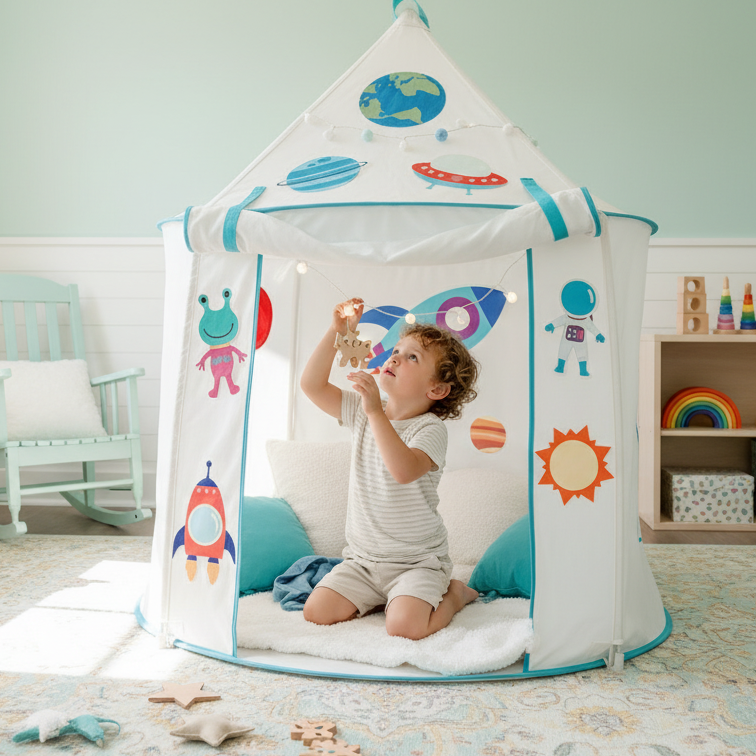
The ZeeZee Adventure Tent is designed as a calm, sensory-friendly environment where children can read, imagine, create, and explore away from screens.
It can become a familiar place where your toddler knows they can go to play.
Bring in some books.
A few soft toys.
Building blocks.
A simple activity basket.
Then allow your child to decide what happens.
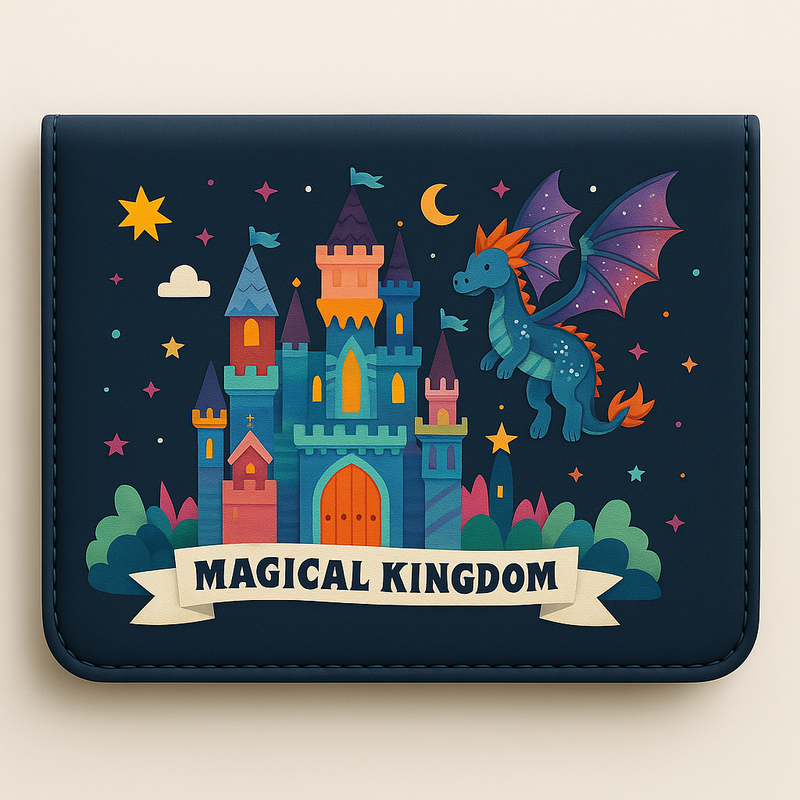
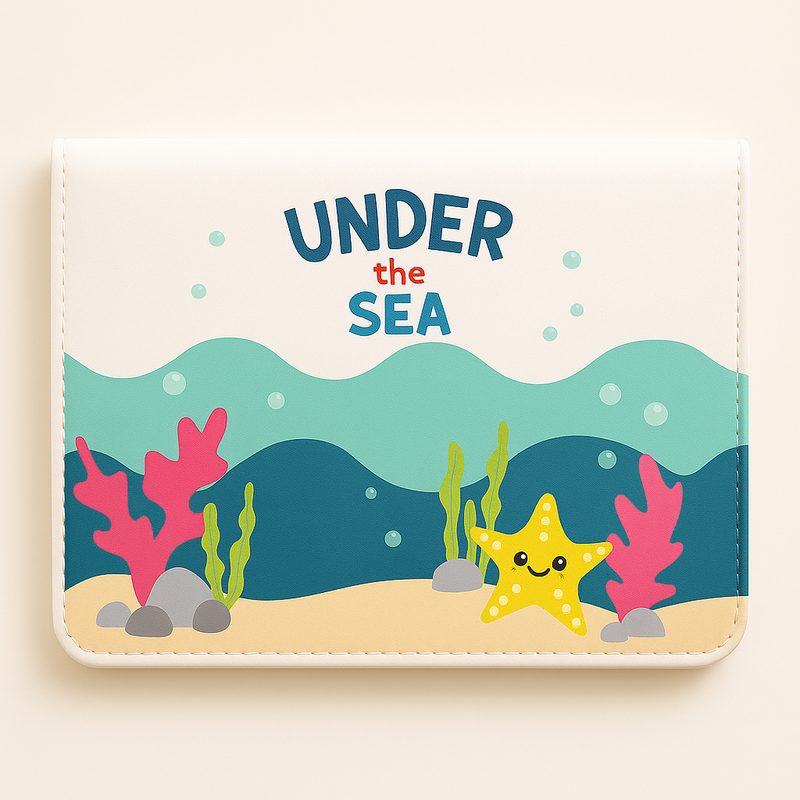
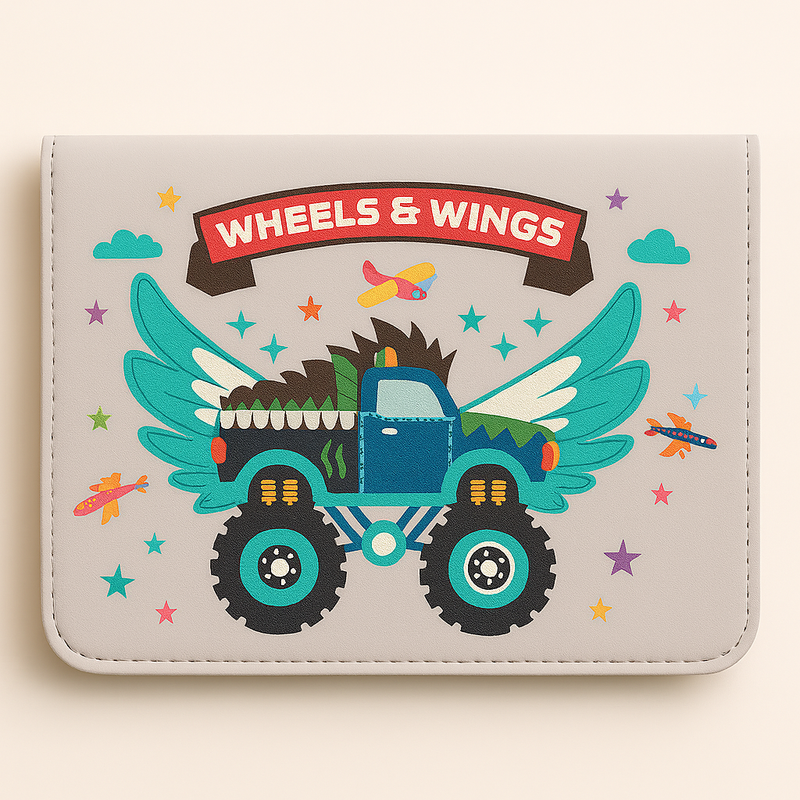
With interchangeable StickeeZ themes, the same space can also become a different imaginary world as your child's interests change.
One day it might be a jungle.
Another day it might be a castle.
Another day it might simply be a cosy place to read.
The important part isn't the theme.
It's that the child has a space where their imagination gets to lead.
A Better Way to Think About Independent Play
Instead of asking:
"How can I keep my toddler occupied?"
try asking:
"How can I give my toddler more ownership of their play?"
That small change in perspective can make a big difference.
You're no longer looking for something that will simply fill time.
You're looking for opportunities that allow your child to:
Choose.
Explore.
Create.
Repeat.
Solve.
Imagine.
And gradually discover:
"I can do this myself."
Part 1 Takeaway
You don't need a magical toy to encourage independent play.
Start small.
Choose familiar activities.
Offer manageable choices.
Keep materials accessible.
Create a calm environment.
Give your toddler time.
And resist the urge to solve every little problem for them.
Independent play isn't about asking children to do more by themselves.
It's about helping them discover that they can.
Simple Activities That Give Toddlers More Ownership
Independent play becomes easier when children are given activities that are interesting enough to explore but open-ended enough that they don't need an adult to tell them what to do next.
That balance matters.
If an activity is too difficult, your toddler may immediately ask for help.
If it is too repetitive or passive, they may quickly lose interest.
But when an activity offers a manageable challenge with plenty of room for choice, something different can happen.
Your toddler starts experimenting.
They try something.
It doesn't work.
They try again.
They change the rules.
They create a new game.
And gradually, they become less dependent on an adult to keep the play going.
In Part 1, we looked at what independent play really means and how the environment can support it. Now let's look at more activities you can actually try at home.
1. The Simple Transfer Activity
Place a few large, safe objects in one container and an empty container beside it.
Invite your toddler to move the objects from one container to the other.
That's it.
You don't need to make it competitive or introduce complicated instructions.
Your toddler may transfer everything.
Then transfer it back.
Then find another way to play with the containers.
Supports: hand-eye coordination, concentration, fine motor control, and independence.
2. Build a Block World
Instead of asking your toddler to build a particular structure, give them a small collection of age-appropriate blocks.
Let them decide what to create.
It might be a tower.
A house.
A road.
A wall.
Or something you don't recognise at all.
Supports: creativity, spatial awareness, problem-solving and independent decision-making.
Try this:
Rather than correcting their construction, say:
"Tell me about what you're making."
Now your child gets to explain the idea instead of following yours.
3. The Cardboard Box Challenge
Give your toddler a large cardboard box.
Don't tell them what it is.
Ask:
"What could this become?"
The box might become a car, a house, a shop, a boat, or a secret hiding place.
Supports: imagination, language, problem-solving, and pretend play.
This is one of those activities where the simplest material can create the most possibilities.
4. Sticker Play
Give your toddler large, age-appropriate stickers and a sheet of paper.
Let them decide where the stickers go.
They may create a picture.
They may simply cover the page.
Both are fine.
Supports: fine motor control, hand-eye coordination, creativity, and decision-making.
5. The "What's Inside?" Basket
Place a few familiar, safe objects inside a basket.
Let your toddler take them out one at a time.
Talk about what they find.
Then let them put everything back.
Supports: object recognition, vocabulary, coordination, and sequencing.
Once they understand the activity, you can leave the basket available for independent exploration.
6. Simple Sorting Station
Choose a few large, safe objects that have obvious differences.
You might use objects that vary by colour, size, or type.
Place them together and let your toddler explore how they could be grouped.
Supports: categorisation, observation and early mathematical thinking.
You don't need to tell them the correct answer.
Let them discover their own system.
7. Container Investigation
Give your toddler several suitable containers.
Some may have lids.
Some may be open.
Some may be larger than others.
Let them explore which objects fit where.
Supports: spatial reasoning, experimentation, coordination, and problem-solving.
This activity can become surprisingly absorbing because your toddler is testing a genuine question:
"Will this fit?"
8. Make a Cosy Reading Basket
Choose several favourite books.
Place them in a small, accessible basket.
Put the basket in a comfortable place.
Your toddler can choose a book whenever they want.
They might look through the pictures.
Turn pages.
Tell the story themselves.
Or bring the book to you.
Supports: early literacy, language, attention, and decision-making.
Independent reading at this age doesn't have to mean reading words.
Looking, pointing, and storytelling all count.
9. Create a Pretend-Play Basket
You don't need a complete pretend-play set.
Choose a few simple items.
A soft toy.
A small blanket.
A suitable cup.
A wooden spoon.
A small bag.
Then let your toddler decide what the objects become.
Supports: imagination, language, social understanding, and independent play.
10. Teddy's Home
Give your toddler a soft toy and a few safe household items.
Ask:
"Where does Teddy live?"
Your toddler can create the answer.
A box might become a house.
A blanket might become a bed.
A basket might become a car.
Supports: pretend play, storytelling, empathy, and problem-solving.
11. Water Pouring
Place a small amount of water in a shallow container.
Add suitable cups or containers.
Let your toddler pour, fill, and empty.
Supports: coordination, concentration, and cause and effect.
Water play should always be closely supervised.
12. Sponge Squeeze
Give your toddler a clean sponge and a shallow container of water.
Let them dip the sponge and squeeze it.
They can watch the water disappear into the sponge and come back out again.
Supports: hand strength, coordination, and sensory exploration.
13. Texture Exploration
Create a small collection of safe objects with different textures.
Soft.
Smooth.
Hard.
Bumpy.
Talk about what your toddler notices.
Once they understand the activity, allow them to explore independently.
Supports: sensory awareness, vocabulary, and observation.
14. Paper and Crayon Station
Keep paper and suitable washable crayons accessible.
Let your toddler draw whenever they want.
Don't give them an assignment.
Don't ask them to draw a house.
Let them decide.
Supports: fine motor skills, creativity, self-expression, and independent decision-making.
15. Cardboard Tube Telescope
A clean cardboard tube can become a telescope.
Your toddler can explore what they can see through it.
Then the story can grow.
Perhaps they are looking for animals.
Perhaps they're searching for pirates.
Perhaps they're exploring another planet.
Supports: imagination, observation, vocabulary, and storytelling.
16. Sock Ball Toss
Roll clean socks into soft balls.
Place a laundry basket a short distance away.
Let your toddler try to throw the socks inside.
Supports: hand-eye coordination, aiming, and gross motor development.
As they become more confident, they can decide where to place the basket.
Now the child is changing the challenge themselves.
17. Cushion Path
Place stable cushions or other suitable soft objects on the floor.
Create a simple path.
Your toddler can step over, around, or between them.
Supports: balance, coordination and body awareness.
Always make sure the area is clear and safe before starting.
18. Animal Movement Game
Invite your toddler to choose an animal.
Then move like that animal.
Crawl like a bear.
Waddle like a penguin.
Stomp like an elephant.
Eventually, let your toddler choose the animal and lead.
Supports: movement, imagination, imitation, and confidence.
19. Everyday Object Treasure Hunt
Choose a familiar household object.
Hide it somewhere safe.
Give your toddler simple clues.
"It's near something soft."
"It's under something."
"It's beside the basket."
Supports: language, memory, movement, and problem-solving.
20. The "What Can I Make?" Box
This is one of the simplest activities you can create.
Take a box.
Add a few safe household materials.
Paper.
Cardboard.
Fabric.
Large cups.
Soft toys.
Then don't provide instructions.
Simply ask:
"What can you make?"
Your toddler might build a house.
Create a shop.
Make a pretend meal.
Construct a spaceship.
Or simply investigate the objects.
There is no wrong answer.
Supports: creativity, imagination, decision-making, and independent play.
Why Open-Ended Activities Often Work Better
There is a reason so many of these activities are deliberately simple.
Open-ended play gives children choices.
If you give a toddler a toy with one obvious function, they may quickly reach the end of what they can do with it.
But when you give them a box, some blocks, or a few pieces of fabric, there isn't necessarily an ending.
The activity can change.
The story can change.
The rules can change.
And your child's role changes too.
They become the person deciding what happens next.
Don't Expect Independent Play to Happen Immediately
This is important.
You might set up an activity and expect your toddler to happily play alone.
Instead, they look at you and say:
"Come!"
That's completely normal.
Don't turn independent play into a battle.
Sit down.
Play together.
Then gradually step away.
You might say:
"I'll build one tower with you, then I'm going to make lunch. You can keep building."
This gives your child a clear transition.
Over time, they may become more comfortable continuing without you.
The 5-Minute Start
If independent play is new for your toddler, start small.
Don't aim for an hour.
Try five minutes.
Choose something familiar.
Set it up.
Stay nearby.
Give your child the opportunity to begin.
If they stay engaged for five minutes, that's enough.
Tomorrow, try again.
You may find that those five minutes gradually become ten.
Then fifteen.
The goal isn't duration for its own sake.
The goal is confidence.
Rotate Activities Instead of Buying More
When children see the same toys every day, those toys can become part of the background.
Instead of buying something new, try rotating what is available.
Put some materials away.
Bring them back later.
Combine familiar toys in a different way.
For example:
Blocks + toy animals
can become a zoo.
Boxes + cushions
can become a house.
Books + soft toys
can become a storytelling corner.
Cups + water
can become a pouring activity.
Sometimes a new combination is all the novelty a child needs.
Create a Simple Independent-Play Rotation
You could keep four categories available at different times.
Building
Blocks, cardboard and construction materials.
Creating
Paper, crayons, stickers and suitable craft materials.
Pretending
Soft toys, fabric and simple props.
Quiet play
Books, puzzles and familiar tabletop activities.
You don't need to offer everything at once.
A smaller selection can make it easier for your toddler to choose.
What to Do When Your Toddler Says "I'm Bored"
Before immediately offering a screen or a new toy, pause.
You can say:
"I wonder what you could find to do."
Then point towards their play materials.
If they need help getting started, offer two choices:
"Would you like to build or look at books?"
Once they choose, let them take over.
You're providing the invitation.
They're providing the play.
When the Activity "Fails"
Sometimes an activity simply doesn't work.
Your toddler isn't interested.
They walk away.
They want something else.
That's okay.
Children have different interests, energy levels, and moods.
An activity isn't unsuccessful simply because it didn't hold your child's attention.
You can put it away.
Try again another day.
Or adapt it.
Maybe the water activity becomes pretend cooking.
Maybe the cardboard box becomes a car.
Maybe the sorting game becomes a shop.
Follow the child.
A Calm Space Can Make a Difference
Independent play isn't only about what children play with.
It's also about where they play.
A calm, familiar space can help signal that it is time to slow down and explore.
This could be a small reading corner.
A play mat.
A low shelf.
A cosy tent.
Or simply a clear section of the room.
The space doesn't need to be elaborate.
It needs to feel accessible and inviting.
A Dedicated Adventure Space
The ZeeZee Adventure Tent can become one part of this environment.
Designed as a cosy, sensory-friendly space, it gives children somewhere to read, imagine, and explore away from screens.
You can keep a small collection of favourite materials nearby.
Books.
Blocks.
Soft toys.
Everyday objects.
Creative materials.
Then let your toddler decide what the space becomes.
With interchangeable StickeeZ themes, the familiar environment can also support different imaginative stories.
A jungle.
A castle.
A space station.
Or simply a quiet place to curl up with a book.
The important part is not creating a perfect themed playroom.
It is creating a place where your child's imagination has room to lead.
A Note for Parents
Independent play should never become another parenting performance.
You don't need to prove that your toddler can play alone.
You don't need to achieve a particular number of minutes.
You don't need to follow every activity exactly.
Your child is learning.
You're learning too.
Some days your toddler may happily play independently.
Other days they may want you beside them.
Both are normal.
Connection and independence aren't opposites.
Children often become more confident exploring independently when they know a trusted adult is available when needed.
10 Signs an Activity Is Supporting Independent Play
Look for small signs such as:
-
Your child chooses the activity themselves.
-
They begin without asking for help.
-
They experiment with the materials.
-
They repeat the activity.
-
They change the activity.
-
They solve a small problem.
-
They create their own story.
-
They stay engaged while you move nearby.
-
They return to the activity later.
-
They decide what happens next.
None of these needs to happen every time.
But when you start noticing them, you'll see that independent play is about much more than keeping a child occupied.
It's about growing confidence.
The Big Idea
If you remember one thing from this article, make it this:
Don't look for activities that keep your toddler busy. Look for activities that give your toddler something to own.
Give them materials.
Give them choices.
Give them manageable challenges.
Give them time.
Then give them space.
The goal isn't to make children need us less.
It's to help them discover that they are capable of doing more for themselves.
And sometimes, the simplest activity is the one that gives them the most freedom.
Part 3: Making Independent Play Easier, Longer and More Natural
Independent play doesn't happen because you find one magical activity that keeps your toddler occupied.
It develops when children repeatedly experience something much more valuable:
"I can choose what to do, and I can figure some of it out myself."
That's why the most successful independent-play activities are rarely complicated.
They are accessible.
They are familiar.
They leave room for imagination.
And they give toddlers enough freedom to take the activity somewhere of their own.
In Part 1, we explored what independent play actually means and how to create an environment that supports it.
In Part 2, we looked at practical activities that give toddlers more ownership.
Now let's look at how to make independent play sustainable in everyday family life.
10 More Independent Toddler Activities to Try
Sometimes the easiest way to encourage independent play is simply to have a few reliable activities ready.
Here are ten more options that require little preparation.
1. The Scavenger Basket
Give your toddler a basket and invite them to find a few large, safe objects around the room.
They might collect a soft toy, a book, a cushion and a plastic cup.
Then let them decide what to do with their collection.
Supports: observation, decision-making, movement and imaginative play.
2. Build a Soft-Toy Home
Provide a few cushions, a blanket and some soft toys.
Your toddler can decide where everyone sleeps.
Maybe the sofa becomes a bed.
Maybe a box becomes a house.
Maybe the tent becomes the entire neighbourhood.
Supports: imagination, sequencing, language and independent decision-making.
3. The Colour Basket
Choose several large, safe household objects in different colours.
Invite your toddler to explore and group them.
You can begin with two colours and introduce more when they're ready.
Supports: visual discrimination, early categorisation and concentration.
4. Make a Book Nook
Place a few favourite books in a cosy corner.
Add a cushion or blanket.
Let your toddler choose which book they want.
They might look through the pictures, tell themselves a story or simply turn the pages.
Supports: early literacy, language, attention and independence.
5. Cardboard Construction
Collect a few pieces of clean cardboard.
Your toddler can stack them, arrange them or combine them with blocks.
Don't demonstrate a finished structure.
Let them decide what they're building.
Supports: creativity, spatial awareness and problem-solving.
6. The Pretend Kitchen
Give your toddler a few safe pretend-play items.
A bowl.
A wooden spoon.
A cup.
A soft toy.
Then let them "cook".
You might discover that today's menu includes soup, cake and something called "purple dinner".
Supports: language, imagination, sequencing and symbolic play.
7. Cushion Animal Rescue
Place a few soft toys around a safe play area.
Your toddler can rescue them using cushions, blankets or a basket.
Supports: gross motor development, problem-solving, imagination and empathy.
8. Create a Toy Car Park
Use paper or cardboard to create parking spaces for toy vehicles.
Your toddler can decide where each vehicle belongs.
They can even invent their own parking rules.
Supports: organisation, spatial awareness, pretend play and decision-making.
9. The Quiet Drawing Box
Keep paper and suitable washable crayons together in an accessible box or basket.
When your toddler wants a quiet activity, they can choose it themselves.
Supports: fine motor development, creativity, and independent engagement.
10. The Imagination Box
Place a small collection of open-ended materials into a box.
Fabric.
Cardboard.
Large cups.
Paper.
Soft toys.
Then give your toddler one instruction:
"Make something."
That's it.
Supports: creativity, problem-solving, imagination, and child-led play.
How to Make an Activity Last Longer
Parents often ask:
"How do I get my toddler to stay with an activity longer?"
The answer isn't necessarily to make the activity more exciting.
Instead, give the child more possibilities.
Consider blocks.
You could simply say:
"Build a tower."
Or you could provide blocks alongside toy animals, cars, and cardboard.
Now the blocks can become:
A house.
A road.
A zoo.
A bridge.
A garage.
The more open-ended the materials, the more ways your toddler can extend the play themselves.
Add One New Element
You also don't need to completely replace an activity when your toddler loses interest.
Add one new element.
Building blocks?
Add toy animals.
Drawing?
Add some stickers.
Pretend cooking?
Add a clean cardboard box as an oven.
Books?
Add a soft toy who "wants to hear the story".
Water play?
Add another suitable container.
One small change can make a familiar activity feel new without creating more work for you.
Follow the Interest, Not the Plan
This may be one of the most important principles in independent play.
You might set up a carefully planned activity.
Your toddler ignores it.
Instead, they become fascinated by the basket.
Don't fight it.
Ask yourself:
What are they interested in right now?
Maybe they want to carry things.
So give them a basket.
Maybe they're fascinated by opening and closing.
Offer suitable containers.
Maybe they're pretending everything is food.
Set up a pretend kitchen.
The best activity may be the one your toddler is already trying to invent.
What If Your Toddler Keeps Asking You to Play?
This is normal.
Especially if they're used to having an adult involved throughout their play.
You don't have to choose between completely joining them and completely walking away.
Try the middle ground.
Start together.
Play for a few minutes.
Give them ownership.
Ask what they want to build or pretend.
Announce your transition.
"I'm going to make lunch now. You can keep building."
Stay nearby when possible.
Your presence can provide reassurance.
Return later.
Show that you are still available without becoming the director of the activity.
This gradual approach can help children become more comfortable taking over the play themselves.
What If Your Toddler Becomes Frustrated?
Independent play should include manageable challenges.
It shouldn't mean leaving your child struggling with something far beyond their current abilities.
If frustration appears, pause.
Can you make the challenge slightly easier?
Can you demonstrate one small step?
Can you offer a choice?
For example:
"Would you like the big box or the small box?"
Instead of solving the entire problem, give your toddler a smaller decision.
The aim is to help them experience success while still allowing them to do the work.
Don't Correct Every Detail
Your toddler's tower doesn't have to be straight.
Their pretend restaurant doesn't need realistic food.
Their drawing doesn't need to resemble anything.
Their toy animals don't need to follow the rules of a real zoo.
If the play is safe, allow room for their interpretation.
Correcting every detail can unintentionally turn child-led play into adult-led play.
Sometimes the best response is simply:
"Tell me about it."
Create a Simple Toy Rotation
You don't need to hide most of your child's toys.
But rotating a few materials can help keep familiar resources interesting.
You might have four broad categories:
Building
Blocks and construction materials.
Creative
Paper, crayons and stickers.
Pretend
Soft toys, fabric and simple props.
Quiet
Books, puzzles and matching activities.
Keep a manageable selection available.
Store some materials away.
Bring them back later.
The goal isn't to create a minimalist home.
It's to make the choices feel manageable.
Use the "One Basket" Rule
If your toddler is overwhelmed by choices, try placing one activity in one basket.
For example:
Building Basket
Blocks + toy animals.
Creative Basket
Paper + crayons + stickers.
Pretend Basket
Soft toys + fabric + simple props.
Quiet Basket
Books + a puzzle.
This makes it easier for your child to see what is available without having to search through an entire room.
Independent Play Doesn't Have to Be Screen-Free All the Time
Screen-free play can be an important part of a balanced routine.
But the goal isn't perfection.
Technology is part of modern family life.
Instead of worrying about eliminating screens completely, think about making sure your toddler has plenty of opportunities to experience something different.
Hands-on play.
Movement.
Books.
Pretend play.
Outdoor exploration.
Creative activities.
Time with family.
Independent exploration.
A varied play environment gives children alternatives when they're not using a screen.
Create a Predictable Play Rhythm
Toddlers often respond well to familiar routines.
You might create a simple rhythm rather than a strict timetable.
Morning
Movement and outdoor exploration.
Afternoon
Open-ended play.
Quiet time
Books, drawing or a cosy play space.
Evening
Pretend play, stories and family connection.
The exact schedule doesn't matter.
What matters is that your child begins to recognise that there are times when they can explore independently.
What Parents Should Avoid
You don't need to do everything perfectly.
But a few habits can make independent play harder.
Avoid constantly introducing new activities.
Children need time to become familiar with materials.
Avoid giving too many instructions.
Leave some decisions to your child.
Avoid solving every problem immediately.
Give them a chance to experiment.
Avoid measuring success only by minutes.
A short period of meaningful independent play still counts.
Avoid comparing your toddler with other children.
Children develop independence differently.
Avoid using independent play as a replacement for connection.
Children still need responsive adults, affection and shared play.
Independent play is one part of a healthy childhood, not the whole picture.
A Simple Independent-Play Checklist
Before setting up an activity, ask:
Is it safe?
Can my toddler use these materials safely for their age and abilities?
Is it accessible?
Can they begin without needing me to do everything?
Is it manageable?
Is the challenge appropriate?
Is it open-ended?
Can they use the materials in different ways?
Is there room for choice?
Can my child decide what happens next?
Can I step back?
Once they've started, can I allow them to take ownership?
If the answer is mostly yes, you probably have a good foundation for independent play.
When Independent Play Is Hard
There will be days when it simply doesn't work.
Your toddler may be tired.
Hungry.
Unwell.
Overstimulated.
Needing connection.
That's okay.
Independent play isn't something you need to force.
Sometimes your child needs you.
Give them that connection.
You can try again later.
The goal is not:
"My child must play alone."
The goal is:
"My child is gradually becoming confident exploring on their own."
Those are very different things.
A Dedicated Space Can Support the Habit
A familiar play environment can help toddlers understand where independent play happens.
This doesn't need to be a separate playroom.
It could be a small corner.
A low shelf.
A floor mat.
A cosy reading nook.
Or a dedicated play tent.
The ZeeZee Adventure Tent can become that kind of familiar space.
It creates a cosy, sensory-friendly environment where children can read, imagine and explore away from screens.
You can place a few books inside.
Add blocks.
Bring in soft toys.
Create a small activity basket.
Then let your toddler decide what happens.
With interchangeable StickeeZ themes, the same space can take on different imaginative identities without changing the entire environment.
One day it might be a jungle.
Another day, a castle.
Another day a quiet reading retreat.
The environment stays familiar.
The possibilities remain open.
A 15-Minute Independent Play Routine
If you want something simple to try, start here.
Minute 1 to 3
Choose one familiar activity and set it up.
Minute 4
Explain only what is necessary.
Minute 5
Let your toddler take over.
Minute 6 to 10
Stay nearby but avoid directing the play.
Minute 11 to 15
If your child remains engaged, let them continue.
If they need you, respond.
That's it.
You don't need a complicated system.
The Real Goal of Independent Play
Independent play isn't about producing a child who never asks for help.
It isn't about keeping toddlers occupied while adults get things done.
And it isn't about removing parents from play.
At its best, independent play gives children a chance to experience something deeply important:
agency.
They choose.
They experiment.
They create.
They solve.
They change their minds.
They try again.
They discover what interests them.
And gradually, they begin to trust their own ability to make something happen.
Final Thoughts
The next time your toddler says:
"I'm bored."
you don't necessarily need to reach for a screen or buy another toy.
Look around.
There might be a cardboard box nearby.
Some paper.
A basket.
A few cups.
A towel.
Some blocks.
A handful of soft toys.
Start with something simple.
Then step back.
Your toddler may surprise you.
Because independent play doesn't begin with the perfect activity.
It begins with a child who is given safe materials, manageable challenges, time, and permission to explore.
And sometimes, the most successful activity is the one where you do the least.
Frequently Asked Questions
How long should a toddler play independently?
There is no universal amount of time. Some toddlers may manage only a few minutes, while others can gradually play for longer. Focus on building confidence rather than reaching a specific number of minutes.
Why does my toddler always want me to play?
Toddlers naturally seek connection and may be accustomed to adult involvement. You can gradually encourage independence by starting activities together and then giving your child ownership while remaining nearby.
What are the best toys for independent play?
Open-ended materials such as blocks, books, art supplies, pretend-play resources and simple construction materials can encourage children to make choices and direct their own activities.
Can household objects encourage independent play?
Yes. Safe, age-appropriate objects such as cardboard boxes, cups, fabric, paper and containers can provide opportunities for creativity, problem-solving and imaginative play.
How can I make independent play last longer?
Use familiar activities, keep choices manageable and introduce occasional new elements rather than constantly changing the entire activity. Most importantly, allow your child to take ownership.
Should I correct my toddler during independent play?
Only when safety or another important concern requires it. Otherwise, give children room to experiment and make their own choices.
Is independent play the same as screen-free play?
Not exactly. Independent play describes who directs the play, while screen-free play describes the type of activity. A child can play independently without a screen, and screen-based activities can also be used independently.
Can a play tent encourage independent play?
A dedicated play space can make independent exploration easier by giving children a familiar environment for reading, pretend play, and quiet activities. It does not guarantee independent play, but it can provide a useful setting for developing the habit.
Author Bio
The ZeeZee Play Experts
The ZeeZee Play Experts are dedicated to helping families create calmer, more imaginative childhoods through purposeful play. Drawing on insights from child development, occupational therapy, and early childhood education, they create practical resources that help parents encourage creativity, curiosity, confidence, and growing independence. Their work focuses on sensory-friendly, screen-free and imaginative play environments where children can explore at their own pace.
It's about helping them discover that they can do more for themselves.




Comment (0)