
Creative Indoor Games for Kids of Every Age
Rainy afternoons, long weekends, sick days, school holidays—there are plenty of moments when children need something fun to do without leaving the house. And if you've ever heard “I'm bored” five minutes after turning off a screen, you know that finding an activity that actually holds a child's attention can be harder than it sounds.
The good news is that indoor play doesn't have to mean elaborate crafts, expensive toys, or a perfectly organized playroom.
Sometimes the best games begin with a blanket, a cardboard box, a few cushions, or a question:
“What could we turn this into?”
Creative indoor games work particularly well because they give children room to make decisions, invent stories, solve small problems, move their bodies, and change the rules. The same basic materials can become something completely different from one day to the next.
Here are creative indoor games organized by age, followed by a simple framework for choosing the right kind of play for your child.
Why Creative Indoor Games Matter
Not every indoor activity needs to have an obvious educational objective.
Children can play simply because something is interesting.
But open-ended games can also give children opportunities to practice skills such as making choices, communicating ideas, experimenting, storytelling, and problem-solving. ZeeZee's own play philosophy centers on open-ended exploration, imaginative play, creativity, and giving children an environment they can help shape.
The important distinction is how much control the child has.
A game with one correct answer has a different kind of experience from a game where a child gets to decide what happens next.
That's why a cardboard box can sometimes hold attention longer than a complicated toy.
The box doesn't tell the child what it is.
The child gets to decide.
Creative Indoor Games for Toddlers
Toddlers generally benefit from simple activities with clear, manageable actions. Keep materials age-appropriate and supervise anything involving small objects, water, or other potential hazards.
1. Animal Walk
Call out an animal and let your child move like it.
“Can you walk like a bear?”
“Can you hop like a frog?”
“Can you flap like a bird?”
Then let your toddler choose the next animal.
2. Cushion Mountain
Arrange cushions safely on the floor and create a pretend mountain range.
Your toddler can climb around it, crawl through “valleys,” or rescue stuffed animals from the top.
3. Treasure Basket
Put a few safe household objects with different shapes and textures into a basket. Let your child investigate, sort, touch, and compare them.
4. Indoor Scavenger Hunt
Ask your child to find something red, something soft, something round, or something that makes a sound.
5. Toy Rescue
Place stuffed animals in different parts of the room and create a simple rescue mission.
The story can be as simple as: “The teddy bears need help getting home.”
6. Dance and Freeze
Play music and dance together. Stop occasionally and freeze.
Let your child become the person who decides when everyone freezes.
Creative Indoor Games for Preschoolers
Preschoolers are often ready for more elaborate pretend play, simple rules, and activities that combine movement with storytelling.
7. Build a Blanket Fort
A blanket fort can become a castle, cave, spaceship, library, or secret headquarters.
Don't decide what it is for them.
Ask, “What is your fort today?”
8. Pretend Restaurant
Give your child paper and crayons to create a menu. They can take orders, prepare pretend meals, and serve family members.
9. Teddy Bear Hospital
Stuffed animals become patients.
Your child can decide what happened, create diagnoses in their own imaginary language, and figure out how to help each patient.
10. Dinosaur Rescue
Hide toy dinosaurs around a room. Give your child a mission to find them and bring them back to a safe location.
Add a story: perhaps a volcano is coming, or the dinosaurs need to find their families.
11. Mystery Bag
Place familiar, safe objects inside a bag. Without looking, your child feels one object and tries to guess what it is.
Then switch roles.
12. Make-Believe Post Office
Create letters, envelopes, and pretend stamps from paper. Your child can sort mail and deliver it around the house.
13. Floor Is Lava
Choose safe “islands”—cushions, rugs, or designated areas—and pretend the floor is lava.
Let your child invent new rules and routes.
14. Three-Object Story
Choose three random objects.
For example: a spoon, stuffed animal, and sock.
Challenge your child to create one story that includes all three.
Creative Indoor Games for School-Age Kids
Older children can handle games with more complicated rules, longer stories, construction challenges, and collaborative problem-solving.
15. Design a Secret Base
Give your child cardboard, paper, blankets, or building materials and challenge them to create a secret headquarters.
What is it for?
Who can enter?
What happens there?
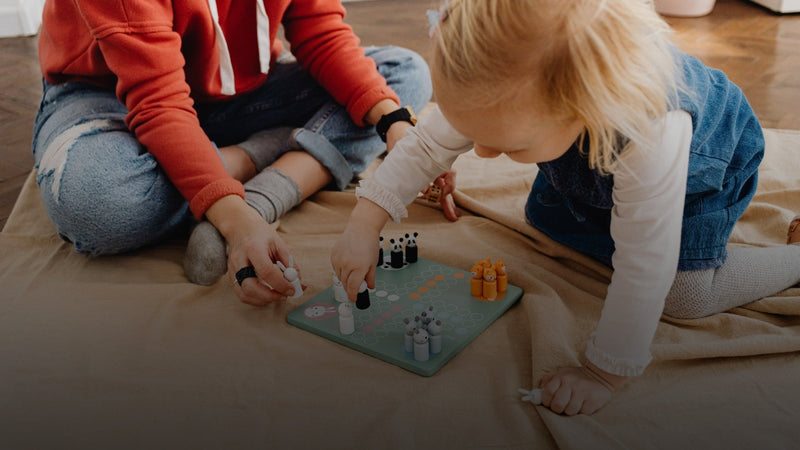
16. Invent a Board Game
Start with paper, dice, and a few household objects.
Your child creates the board, rules, characters, and winning conditions.
It doesn't have to work perfectly.
The process is the game.
17. Indoor Escape Room
Create a series of age-appropriate clues leading to a final “treasure.”
Older children can even design an escape room for their parents or siblings.
18. Newspaper Challenge
Give your child old newspaper or paper and ask:
“Can you build something that stands on its own?”
Then test the design.
19. Living-Room Museum
Your child chooses several objects, arranges an exhibition, creates labels, and becomes the museum guide.
You are now the visitor.
Ask questions.
20. Character Interview
Choose a fictional character.
One person is the interviewer; the other answers in character.
“What is your biggest adventure?”
“What are you afraid of?”
“What would you do if you found a magical door?”
21. Indoor Treasure Map
Draw a map of the house and mark a hidden treasure.
Older children can make the map deliberately difficult for someone else to follow.
22. Build a Marble or Ball Run
Using cardboard tubes, blocks, boxes, or other suitable materials, design a route for a ball.
Then experiment.
What happens if you change the height?
Where does the ball slow down?
Can you make it travel farther?
Creative Games Siblings Can Play Together
When children play together, the activity doesn't have to be perfectly cooperative. Negotiating roles and deciding how a game works can become part of the experience.
23. Build a City Together
One child builds roads, another builds houses, and another creates parks or shops.
Then invent the people who live there.
24. Restaurant Challenge
One child runs the restaurant while another creates the menu.
Then switch.
25. Story Relay
One child starts a story with a single sentence.
The next person adds another.
Keep going until you have a completely unexpected adventure.
26. Indoor Olympics
Create simple events such as balancing, balloon tapping, paper-plane distance, or sock tossing.
Let the children invent the scoring system.
27. Build-and-Guess
One child builds something with blocks while the others try to guess what it is.
Then reveal the intended creation.
28. The Secret Mission
Create a fictional mission that requires several tasks.
Find the hidden object. Solve the clue. Cross the “river.” Rescue the character.
The children decide how to complete it.
When Children Need Quieter Indoor Play
Creative play doesn't always have to involve running around.
Some moments call for books, drawing, storytelling, or simply having a place where a child can play at their own pace.
Try:
-
Creating a cozy reading corner
-
Drawing an imaginary world
-
Making a comic strip
-
Listening to an audio story
-
Building a small LEGO or block world
-
Looking through picture books and inventing new endings
-
Creating a stuffed-animal sleepover
-
Making a “secret journal”
-
Designing imaginary characters
-
Setting up a small pretend campsite
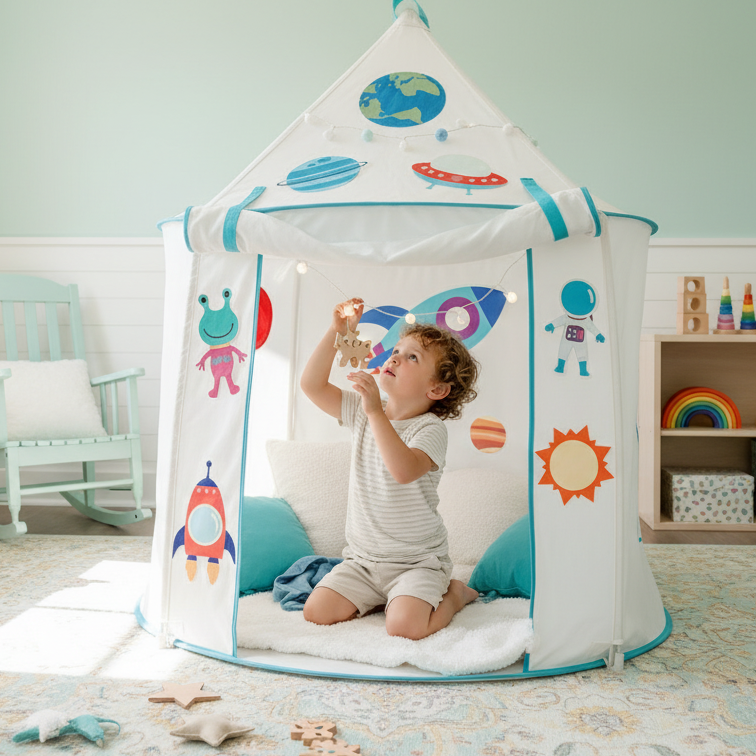
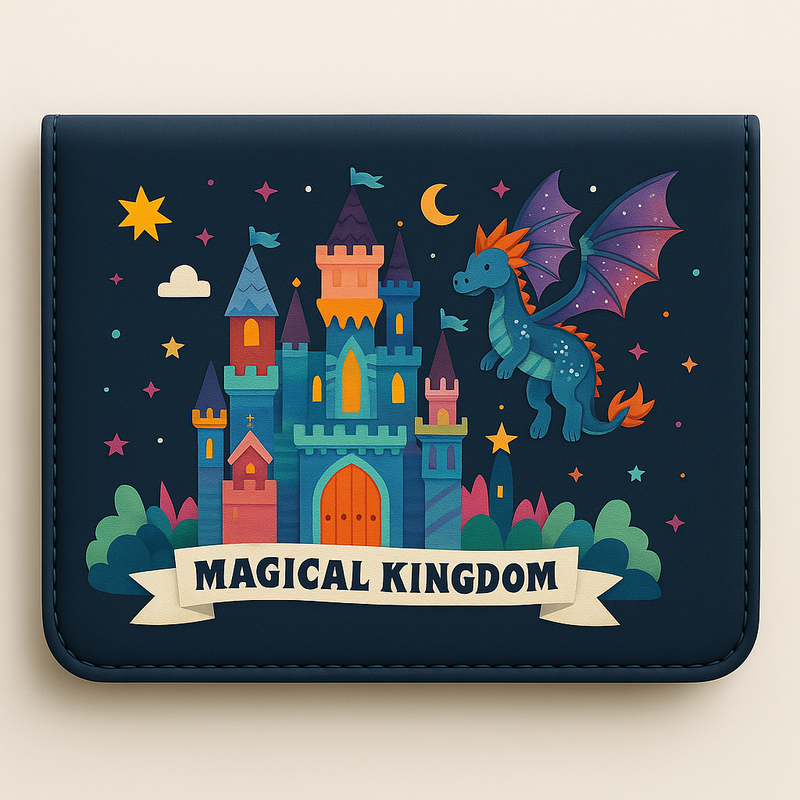
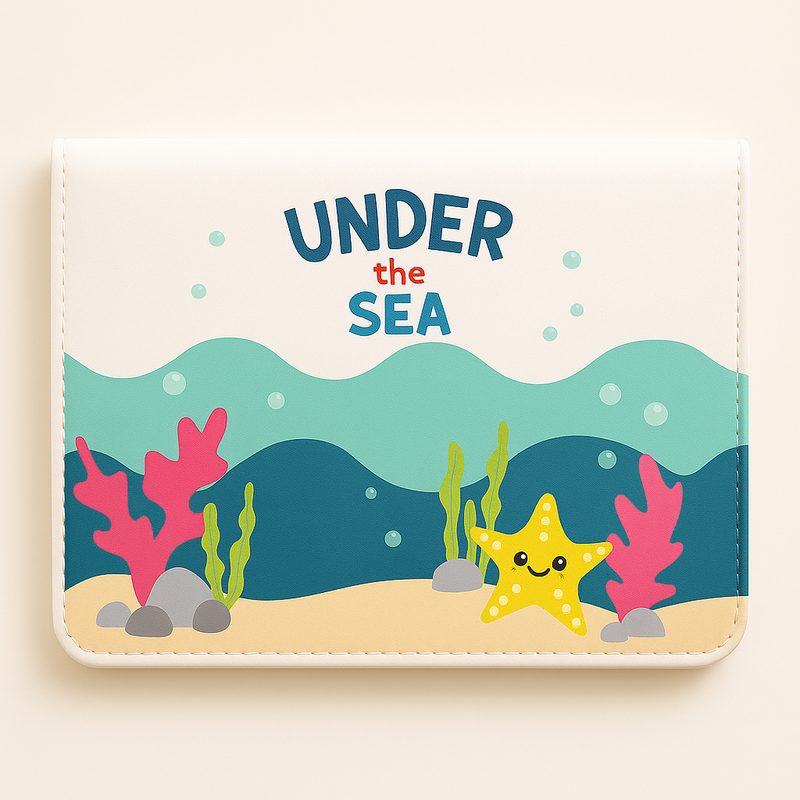
A cozy, dedicated play environment can make these quieter forms of play easier to return to. ZeeZee's product materials describe its tent as a customizable play space intended for imaginative, screen-free play, with changeable StickeeZ themes that can alter the setting as children's interests change.
That adaptability is useful as a general play principle: the environment doesn't always have to change completely for play to feel new.
Sometimes the story changes.

The CREATE Framework for Choosing a Game
When you're out of ideas, you don't need to remember dozens of activities.
Think CREATE:
C — Create
Draw, build, craft, design, invent.
R — Role-play
Become an astronaut, chef, doctor, explorer, shopkeeper, or fictional character.
E — Explore
Sort, touch, investigate, listen, compare, discover.
A — Act
Dance, balance, crawl, climb safely, move, race.
T — Tell
Make up stories, characters, worlds, mysteries, and adventures.
E — Engage
Read together, play a game, interview each other, or build something collaboratively.
This is an original ZeeZee educational framework rather than a clinically validated model. Its purpose is simply to give parents a quick way to identify what kind of play might fit the moment.
How to Choose the Right Indoor Game for Your Child
Age is useful, but it isn't the only factor.
Two children the same age can have completely different interests.
One may spend an hour constructing a detailed city. Another may prefer pretending to be a dinosaur. One may seek movement and noise, while another chooses books and quiet drawing.
So instead of asking:
“What should a child this age be doing?”
try asking:
“What kind of play seems to interest my child right now?”
If they're restless, try movement.
If they're asking endless questions, try exploration.
If they're telling elaborate stories, offer pretend-play materials.
If they're tired or overwhelmed, a quieter space may be more appropriate.
And if they reject your carefully planned activity?
That's okay too.
Sometimes the most creative game is the one children invent after ignoring the one you prepared.
Make Indoor Play Easier, Not More Complicated
Parents don't need to become full-time activity directors.
Keep a few flexible materials available: paper, crayons, blocks, blankets, cardboard, books, stuffed animals, and age-appropriate craft supplies.
Rotate what is visible instead of putting everything out at once.
And when possible, give children some ownership over their play environment.
A tent can become a castle.
A corner can become a library.
A blanket can become a cave.
A cardboard box can become almost anything.
This is one reason the idea of an adaptable play environment is so powerful. Rather than constantly introducing something new, you can give children a familiar space that changes meaning as their imagination changes. That principle is closely aligned with ZeeZee Adventures' approach to customizable, open-ended play.
Final Thought
Creative indoor play isn't about keeping children busy every minute.
It's about giving them opportunities to make something happen.
To invent the rules.
To change the story.
To decide what a box is.
To turn cushions into mountains.
To make a stuffed animal the hero.
And eventually, perhaps, to look around the room and think:
“I know what we can play.”
That's when an ordinary afternoon can become an adventure.




Comment (0)